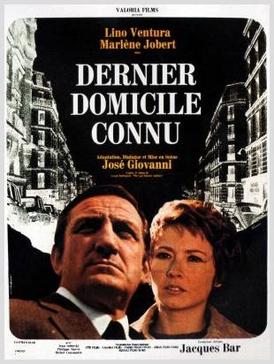
Beyond the Badge: Lino Ventura's Fight Against Corruption in Last Known Address (1970)
In the annals of French cinema, few films capture the raw grit and moral complexity of a police procedural quite like José Giovanni's 1970 masterpiece, Dernier Domicile Connu, internationally known as Last Known Address. This Franco-Italian thriller transcends mere genre conventions, delving deep into the inherent flaws of a system and the unwavering integrity of a man determined to uphold justice, even when it costs him everything. At its heart is an unforgettable performance by the stoic Lino Ventura, whose portrayal of Inspector Marceau Léonetti becomes a timeless emblem of defiance against institutional corruption and the seemingly impossible search for truth.
The film opens not with a bang, but with a quiet injustice that sets the tone for Léonetti's arduous journey. A highly decorated and relentlessly effective judicial police inspector, Marceau Léonetti is a man who knows only his duty. His career, marked by brilliant service and even a Légion d'honneur, takes an abrupt turn after he arrests an intoxicated young man recklessly driving a luxury car. This isn't just any joyrider; he's the son of a powerful, well-connected lawyer. What follows is a swift and brutal lesson in how influence can corrupt the scales of justice. The lawyer crafts a deceitful report, painting Léonetti as a violent, unfit officer, leading to his ignominious demotion and transfer to a quiet, forgotten neighborhood precinct. This initial conflict immediately establishes the central theme: an honest man's struggle against a system that can be bent by power and privilege.
The Uncompromising Officer: Lino Ventura as Marceau Léonetti
Lino Ventura embodies Marceau Léonetti with a quiet intensity that is both captivating and deeply resonant. Ventura, known for his roles as tough, principled men, brings an authentic gravitas to Léonetti. He's not a talker; his resolve is etched in his weary eyes and firm demeanor. Demoted and seemingly sidelined, Léonetti is initially tasked with the mundane and often demeaning duty of tracking perverts in local cinemas. It's a stark contrast to his previous high-stakes work in the Parisian criminal brigade, designed, one might infer, to break his spirit or at least keep him out of trouble.
Into this bleak professional landscape steps Jeanne (played with a blend of naiveté and earnest determination by Marlène Jobert), a young auxiliary police officer. Jeanne, a former literature student from Lyon, harbors a sincere belief in the reformative potential of the police force and has dedicated herself to social work through law enforcement. Her idealism provides a fascinating counterpoint to Léonetti's hardened cynicism. Their partnership, initially born out of bureaucratic assignment, gradually evolves into a professional bond built on mutual respect and a shared pursuit of justice, highlighting the generational differences in their approach to police work while underlining the timeless need for integrity.
The Impossible Pursuit: Unraveling the Mystery of Roger Martin
The true heart of Dernier Domicile Connu beats when Léonetti and Jeanne are assigned a new, seemingly insurmountable mission: to locate Roger Martin. Martin is a crucial witness, a humble accountant who disappeared five years prior without a trace, and whose testimony is now vital to dismantle the alibi of Soramon, a notorious and powerful gangster. The trial is set to begin in just eight days, adding an excruciating layer of urgency to an already desperate search.
Léonetti's colleagues, perhaps intentionally, frame the task as purely formal, implying it's a dead end—a mission designed to fail. Yet, beneath their casual dismissal lies a grudging respect for Léonetti's unmatched tenacity. They know that if anyone can find Martin against all odds, it's him. This underlying dynamic subtly exposes another facet of the film's portrayal of corruption: a system that might not actively prevent justice, but certainly doesn't go out of its way to achieve it when powerful interests are at stake. It implies that certain cases are simply allowed to lapse, or deliberately made difficult, to protect the influential.
Armed with only Martin's last known address and no photograph, Léonetti and Jeanne embark on their painstaking search. Their investigation quickly yields two critical pieces of information: Martin is not alone, he has a child with him, and—more ominously—Soramon's own accomplices are also desperately searching for Martin. This revelation elevates the stakes exponentially, transforming the police procedural into a perilous race against time, not just to find a witness, but to protect him from forces that clearly wish him silenced. The streets of Paris become a labyrinth of clues, dead ends, and lurking dangers, each step bringing Léonetti and Jeanne closer to a truth that some would rather keep buried.
A Portrait of Paris: Atmosphere and Realism in Dernier Domicile Connu
José Giovanni, a director known for his gritty, realistic thrillers, imbues Dernier Domicile Connu with an undeniable sense of authenticity. The film eschews flashy action for meticulous detective work, focusing on the tedious yet crucial process of knocking on doors, sifting through leads, and navigating the social fabric of urban Paris. The city itself becomes a character, with its diverse neighborhoods, bustling markets, and quiet backstreets providing a rich, textured backdrop to the unfolding drama. This isn't the romanticized Paris of postcards, but a working-class metropolis teeming with ordinary people, each a potential key to Martin's whereabouts.
The film's atmosphere is further amplified by the legendary score from François de Roubaix. His unique blend of haunting melodies and innovative electronic sounds creates an unforgettable sonic landscape that perfectly complements the film's suspenseful and melancholic tone. De Roubaix's music doesn't just underscore the action; it enhances the emotional depth, adding layers of tension and introspection that elevate the viewing experience. This commitment to realism, both visual and auditory, contributes significantly to the film's lasting impact, solidifying its place as a benchmark for authentic European crime thrillers. For a deeper dive into the film's impact on French cinema, consider reading more about Dernier Domicile Connu: The Impossible Search for Justice in a 1970 Thriller.
Enduring Relevance: Themes of Justice, Integrity, and Systemic Failure
The true brilliance of Dernier Domicile Connu lies in its exploration of themes that remain profoundly relevant today. The film is a powerful commentary on the fragility of justice when confronted by systemic corruption and the insidious influence of power. Léonetti's demotion is a stark reminder that even the most principled individuals can be targeted and sidelined when they threaten the established order. His subsequent quest for Martin becomes a microcosm of a larger battle: the fight to ensure that truth and justice are not merely abstract ideals, but tangible realities for everyone, regardless of their social standing.
Lino Ventura's portrayal masterfully conveys the quiet resilience required to maintain integrity in the face of immense pressure. He embodies the idea that true heroism often lies not in grand gestures, but in the relentless, often thankless, pursuit of what is right. Marlène Jobert's Jeanne, with her initial idealism, gradually learns the harsh realities of the system, yet her unwavering support for Léonetti signifies the enduring hope for change and the importance of individual commitment. The film challenges viewers to question where true power lies and what sacrifices are necessary to uphold moral principles in a world often governed by self-interest.
Ultimately, Dernier Domicile Connu is more than just a suspenseful thriller; it's a poignant meditation on the human cost of a flawed justice system. It celebrates the unyielding spirit of those who, like Marceau Léonetti, refuse to compromise their values, even when the odds are stacked overwhelmingly against them. The film's enduring appeal is a testament to its timeless themes, compelling performances, and masterful storytelling, making it a must-watch for aficionados of classic European cinema and anyone interested in the complex dance between law, ethics, and power.