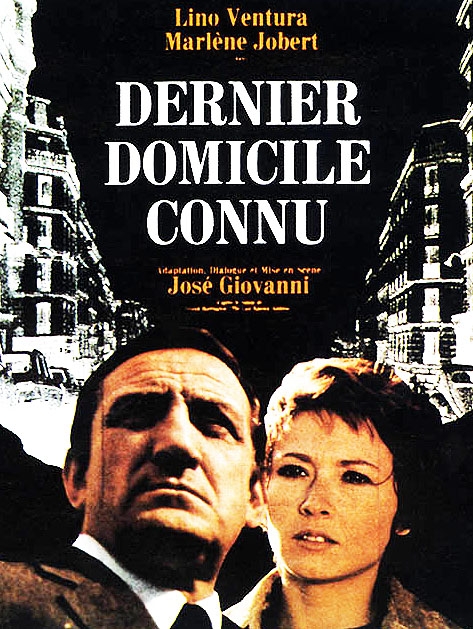
Dernier Domicile Connu: The Impossible Search for Justice in a 1970 Thriller
In the annals of French crime thrillers, few films capture the gritty realism and moral ambiguity of the 1970s quite like Dernier Domicile Connu. Directed by José Giovanni and released in 1970, this Franco-Italian production plunges viewers into a labyrinthine quest for justice, where the lines between law and corruption are dangerously blurred. Known internationally as Last Known Address, the film masterfully blends suspense with poignant social commentary, anchored by a powerhouse performance from cinema legend Lino Ventura.
At its heart, Dernier Domicile Connu is more than just a police procedural; it's a scathing indictment of systemic power and the individual's struggle against an inherently unjust system. From its opening scenes, the film establishes a world where integrity is a liability, and truth is a commodity manipulated by the powerful. This timeless narrative continues to resonate, drawing audiences into a captivating story where finding a single, elusive witness becomes an epic battle against insurmountable odds.
The Unjust Demotion and a Seemingly Impossible Task
The film opens by introducing us to Marceau Léonetti (Lino Ventura), a highly decorated, no-nonsense chief inspector in the Parisian criminal brigade. Léonetti embodies the ideal of a dedicated police officer: effective, principled, and utterly committed to his duty. However, his unyielding commitment proves to be his undoing when he arrests an intoxicated young man recklessly driving a luxury car. This isn't just any joyrider; he's the son of a powerful and influential lawyer. What follows is a swift and brutal lesson in the realities of institutional power. The lawyer leverages his connections, fabricating a report that paints Léonetti as a violent and unfit officer. To appease the influential attorney and avoid further scandal, Léonetti is summarily demoted and transferred to a small, unassuming neighborhood precinct.
This demotion isn't just a career setback; it's a profound blow to Léonetti's sense of justice and purpose. Stripped of his authority and relegated to mundane tasks, his disillusionment is palpable. At his new post, he's tasked with catching minor offenders, a far cry from the high-stakes criminal investigations he once led. It is here that he's paired with Jeanne (Marlène Jobert), a young, idealistic police auxiliary. Jeanne, a former literature student from Lyon, believes deeply in the reformative potential of the police force and approaches her work with a fresh, empathetic perspective – a stark contrast to Léonetti's hardened cynicism. Their initial dynamic is one of cautious respect, a clash of idealism against jaded experience that slowly evolves into a symbiotic partnership.
The true challenge arrives when Léonetti and Jeanne are assigned what appears to be a fool's errand: to locate Roger Martin, a crucial witness who vanished five years prior without a trace. Martin's testimony is vital to dismantle the alibi of Soramon, a notorious gangster whose trial is imminent. Léonetti quickly senses the impossible nature of the task; his colleagues, while feigning indifference, know his tenacity and are subtly testing him, perhaps hoping he'll succeed where others have deliberately failed. The short timeline – just eight days – combined with the complete lack of recent information or even a photograph of Martin, screams sabotage. This seemingly impossible search isn't just about finding a witness; it's about Léonetti's personal quest for redemption and a quiet defiance against the corrupt system that tried to break him. Lino Ventura's Demoted Cop Hunts Elusive Witness in Last Known Address captures the essence of this relentless pursuit.
A Gritty Portrait of Justice and Corruption
Dernier Domicile Connu excels in its unflinching portrayal of the French justice system, exposing its vulnerabilities to corruption and influence. The film masterfully uses Léonetti's demotion as a microcosm of a larger, insidious problem: when the powerful can manipulate the law, true justice becomes a scarce commodity. Léonetti and Jeanne’s quest to find Roger Martin is not merely a police investigation; it’s a symbolic fight against an invisible enemy—the network of power and privilege that protects criminals like Soramon and punishes those who dare to challenge it.
The core theme revolves around the struggle between individual integrity and systemic decay. Léonetti, despite his jaded exterior, maintains an unyielding moral compass. He doesn't chase glory; he chases truth, even when it means battling his own institution. His relationship with Jeanne highlights this thematic tension. Her youthful idealism provides a moral counterpoint to his weariness, reminding him, and the audience, that belief in justice, however fragile, is essential. Together, they navigate the murky underbelly of Paris, encountering dead ends, subtle threats, and outright obstruction. They discover that Martin has a child, adding a layer of human vulnerability to their search, and that Soramon's accomplices are also desperately searching for Martin – a race against time where the stakes are life and death.
José Giovanni, a director known for his experience within the French criminal underworld before becoming a filmmaker, brings an authentic, almost documentary-like feel to the narrative. His direction doesn't shy away from the monotonous, often thankless grind of police work. The film illustrates that justice isn't always served through dramatic shootouts but often through painstaking, door-to-door inquiries, endless questioning, and piecing together fragments of information. This realism grounds the film, making the eventual breakthroughs, however small, feel earned and impactful. Beyond the Badge: Lino Ventura's Fight Against Corruption in Last Known Address (1970) further delves into the thematic depth of his character's struggle.
Crafting the Thriller: Giovanni's Vision and Iconic Performances
José Giovanni’s directorial style in Dernier Domicile Connu is characterized by a lean, economical approach that prioritizes atmosphere and character over elaborate plot twists. Having authored several crime novels before directing, Giovanni possessed an innate understanding of the criminal milieu, which he infused into his films. He eschews sensationalism, opting instead for a gritty, noir-infused realism that paints Paris not as a romantic backdrop, but as a sprawling, sometimes hostile, urban labyrinth. His focus remains firmly on the human element, exploring the psychological toll of the search and the moral compromises characters are forced to make.
The film is undeniably a showcase for Lino Ventura’s formidable talent. Ventura, with his stoic demeanor and powerful presence, perfectly embodies Marceau Léonetti. He conveys immense strength and unwavering determination, yet beneath the hardened exterior lies a profound weariness and frustration with a system he once served with pride. His performance is a masterclass in subtlety; a glance, a sigh, a flicker of emotion across his craggy face speaks volumes, revealing the internal battle of a man whose principles are constantly tested. He is the quintessential world-weary cop, a figure both relatable and heroic in his quiet defiance.
Marlène Jobert, as Jeanne, provides an essential contrast to Ventura. Her youthful energy and naive optimism inject a much-needed warmth and hope into the otherwise bleak landscape. Jeanne represents the future, a belief in the possibility of change and reform, and her interactions with Léonetti slowly chip away at his cynicism, revealing his hidden humanity. Their evolving partnership is one of the film's most compelling aspects, adding depth to the narrative beyond the typical police procedural.
Adding to the film's distinctive character is the remarkable score by François de Roubaix. His pioneering electronic compositions create a haunting, often melancholic, and undeniably cool sonic backdrop that perfectly complements the film's somber mood and suspense. De Roubaix's unique musical style, often minimalist and evocative, enhances the sense of isolation and the methodical nature of the investigation, becoming an iconic element of Dernier Domicile Connu and solidifying its place in cinematic history.
Why Dernier Domicile Connu Endures
More than fifty years after its release, Dernier Domicile Connu continues to captivate audiences and critics alike, holding a revered position within the pantheon of French crime thrillers. Its enduring appeal lies in its timeless themes: the perpetual struggle for justice against entrenched corruption, the resilience of the human spirit in the face of overwhelming odds, and the complex moral landscape of law enforcement. The film serves as a powerful reminder that the fight for truth is often a solitary, thankless, and dangerous endeavor.
The film’s meticulous pacing, which might be described as a "slow burn" by contemporary standards, allows for deep character development and a truly immersive experience. It eschews superficial thrills for a methodical build-up of suspense, mirroring the painstaking nature of real police work. Viewers are invited to inhabit the shoes of Léonetti and Jeanne, feeling every frustration, every small victory, and the profound weight of their mission. This focus on realism and human drama ensures that the film remains relevant, speaking to universal concerns about fairness, accountability, and the power dynamics that shape society.
For those interested in exploring the rich heritage of French cinema, particularly the *policier* genre, Dernier Domicile Connu is an essential viewing experience. It stands as a testament to José Giovanni's skill as a storyteller and Lino Ventura's iconic status as an actor who could convey profound depth with understated power. It's a film that demands reflection, prompting viewers to consider the true cost of justice and the courage it takes to pursue it, even when the odds are stacked against you.
In conclusion, Dernier Domicile Connu is far more than just a crime thriller; it is a profound cinematic statement. Its exploration of moral integrity versus systemic corruption, coupled with the unforgettable performances of Lino Ventura and Marlène Jobert, ensures its place as a classic. The film's meticulous direction, haunting score, and a narrative that builds tension with quiet intensity, make it a compelling and thought-provoking watch that resonates just as powerfully today as it did upon its release in 1970. It’s a compelling journey into the heart of a city and the soul of a man determined to find justice, no matter how impossible the search.